Thinking about buying a rental property in Arcata? It can be an appealing idea for good reason. Arcata has a renter-heavy housing market, steady off-campus student demand, and a mix of property types that can fit different goals. At the same time, local rules, older housing stock, and realistic cash-flow math matter more here than many first-time investors expect. If you want to understand what to watch before you buy, this guide will help you look at Arcata with clear eyes. Let’s dive in.
Why Arcata gets investor attention
Arcata stands out because it has a strong renter presence. According to the U.S. Census QuickFacts for Arcata, the city had an estimated 2024 population of 18,748, an owner-occupied housing rate of 36.4%, and a median gross rent of $1,327.
Those numbers suggest a market where renting is common, but they also point to the need for careful planning. The same Census data shows a median household income of $46,713 and a poverty rate of 27.2%, which means you should avoid assuming rent growth will always neatly cover rising ownership costs.
Student demand shapes the market
One of Arcata’s biggest rental drivers is Cal Poly Humboldt. In the university’s student housing environmental review, the school states that about 70% of students live off campus, mostly in Arcata or elsewhere in Humboldt County.
That off-campus demand is important if you are considering a long-term rental. It helps explain why Arcata often attracts small investors looking at homes, duplexes, or other properties that may appeal to renters connected to the university.
Still, demand is only part of the picture. The same university review describes a planned 964-bed student housing project about half a mile north of campus, which could affect future off-campus absorption over time.
Property types in Arcata
If you picture Arcata as mostly detached homes, the local housing data tells a more mixed story. The city’s Housing Element reported that detached single-family homes made up 42.08% of housing units in 2018, while 5-or-more-unit buildings made up 25.30% and 2-to-4-unit buildings made up 15.00%.
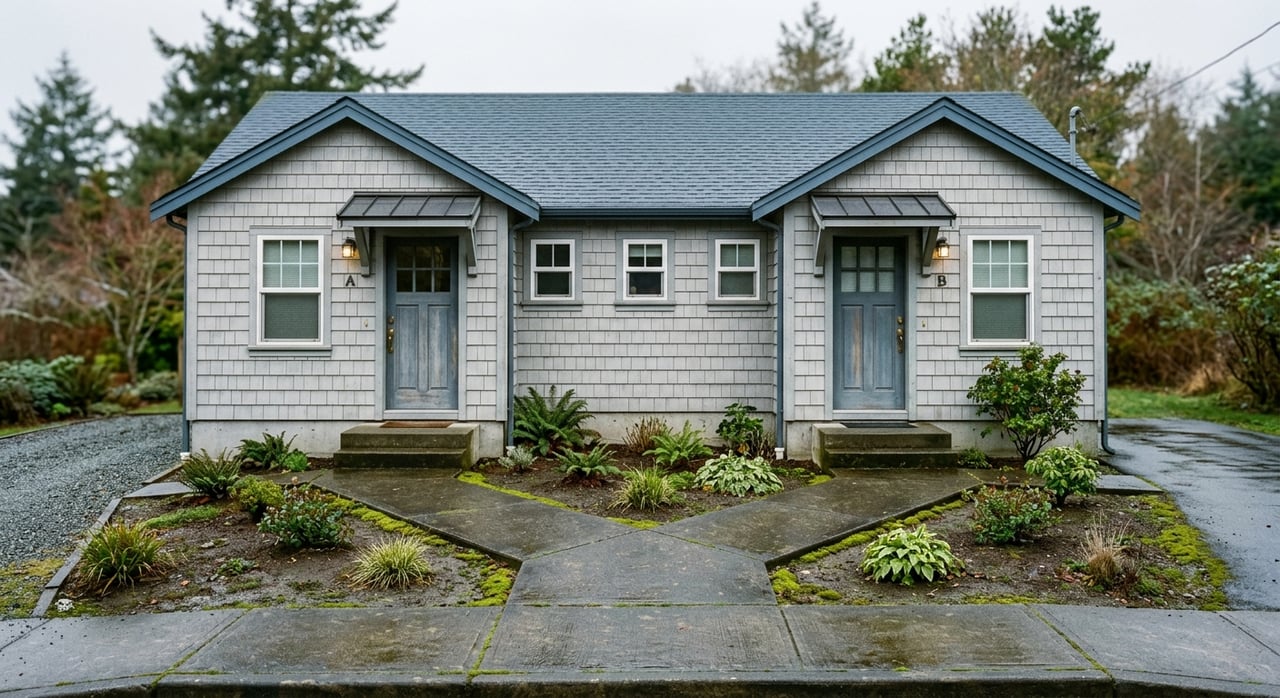
That mix can create options depending on your goals. You might focus on a single-family home with long-term appreciation potential, a duplex that offers more than one income stream, or a property with room for added utility if local rules allow it.
The same report also matters for another reason. It found that 43.57% of Arcata’s housing stock was built before 1970, and 18.05% was built before 1950.
Older homes can change the math
Older homes often come with character, but they can also bring repair and rehabilitation costs. In Arcata, that is not a side issue. It is a core part of due diligence because such a large share of the housing stock predates modern systems and standards.
If you are comparing rental properties, it helps to look beyond the list price. A lower-priced property may still require more work, more reserve funds, and more patience than a newer or better-updated option.
Zoning and future use matter
Before you buy, it is smart to look at what the parcel allows today and what constraints might apply. Arcata’s General Plan 2045 explains that low-density residential areas are intended primarily for single-family homes, duplexes, and accessory dwelling units, and under current state law many low-density lots may allow up to four units.
The plan also describes medium-density areas as suitable for duplexes, townhouses, co-housing, low-density apartments, and modular housing in mobile-home parks. High-density areas are intended for housing near commercial and employment uses, public services, schools, and parks.
For buyers thinking long term, this matters. A property that works as a straightforward rental today may also have future flexibility, while another parcel may have tighter limits than you expected.
Check the parcel before you commit
The city encourages buyers to verify zoning and site constraints before purchasing. Arcata’s GIS Parcel Finder and Property Report can show zoning, general plan land use, coastal zone status, hillside development needs, and other hazards or constraints.
That step can save you from expensive surprises. The city notes that the Coastal Zone covers about one-third of Arcata’s land area, and ongoing planning updates are addressing sea-level rise, coastal hazards, wetlands, and environmentally sensitive areas.
Transit access can support tenant appeal
Location is never just about the property itself. For many renters, access to daily transportation can affect how practical a home feels.
According to Humboldt Transit, the Arcata and Mad River Transit System serves Arcata Monday through Friday with limited Saturday, holiday, and Cal Poly break service. Redwood Transit System also connects Arcata with nearby communities Monday through Saturday.
That does not make every property equal, but it is one more factor to weigh when comparing locations. Properties with easier access to campus, downtown, or transit routes may appeal to a wider range of renters.
Local rental rules to know
Arcata has local rules that are especially important for long-term rental owners. The city’s Residential Rental Inspection Program applies to all one- and two-family rental units, with exemptions for multi-family apartments, mobile home parks, and new construction within the last five years.
The city says the program is meant to improve health and safety compliance and preserve neighborhood quality. If you are buying a one- or two-family rental, this is part of the ownership landscape you should understand up front.
Sewer lateral rules can affect closing
For older properties, sewer lateral requirements deserve close attention. Arcata’s sewer lateral replacement and inspection rules require inspection of sewer laterals for buildings and homes over 25 years old when a property is sold, when a major remodel of $30,000 or more is planned, and for projects involving two or more new drainage fixture units.
If repairs are needed, they generally must be completed before escrow closes unless a bond or refundable deposit is used for a time extension. That can directly affect negotiation strategy, repair planning, and cash needed to close.
Short-term rentals are a separate issue
Some buyers wonder if they can pivot a property into short-term use later. In Arcata, that is not something to assume.
The city’s short-stay and vacation rental rules require a permit for transient occupancy of up to 29 days, cap permits at 100 units, and require a city business license plus transient occupancy tax. Owner-occupied, historic landmark, and occasional-use exemptions may apply, but short-term use is clearly more restricted than standard long-term renting.
Stress-test your cash flow
When you evaluate an Arcata rental, conservative underwriting is your friend. The local median gross rent of $1,327 from the Census QuickFacts data can be a useful benchmark, but it is only a snapshot, not a promise.
A better approach is to model the full picture, including:
- Purchase price
- Loan payment and financing terms
- Property taxes
- Insurance
- Routine maintenance
- Vacancy
- Property management, if used
- Capital reserves for repairs and replacements
This is especially important in a market with older homes and renter-sensitive price points. A property can look workable at first glance and feel very different once realistic expenses are included.
Think long term, not easy money
Arcata may be a better fit for patient ownership than for buyers expecting fast or automatic returns. The combination of a renter-heavy population, student influence, older housing stock, and active local oversight points toward a market where due diligence matters more than shortcuts.
The city’s broader policy direction also supports more housing within the existing urban footprint. Arcata’s Strategic Infill Redevelopment Program prioritizes infill development around downtown, and city efforts tied to PRO Housing funding include land-use code updates, an ADU program, and a Valley West form-based code.
For you, that means the best opportunity may not always be the most obvious one. A parcel with the right zoning, condition, and long-term flexibility may outperform a property that only looks good on day one.
Questions to ask before buying
As you narrow your options, a few practical questions can help frame the decision:
- Does the property’s zoning support your intended use?
- Could the lot support an ADU or second unit under current rules?
- How much deferred maintenance is visible or likely?
- Will city inspections or repairs be triggered during the sale?
- How would the numbers look if rents softened or vacancy increased?
- Are you buying for immediate cash flow, long-term appreciation, or a house-hack setup?
Those questions can help you compare properties more clearly and avoid buying based on best-case assumptions.
How Redwood Realty can help
If you are considering a rental property in Arcata, local guidance matters. You need someone who can help you look beyond the listing photos and think through condition, zoning context, neighborhood fit, and the practical details that shape long-term ownership.
At Redwood Realty, we help buyers across Humboldt County make informed decisions with clear, consultative support. If you are exploring Arcata investment potential, owner-occupant strategies, or small multi-family options, we are here to help you evaluate what fits your goals.
FAQs
What makes Arcata attractive for rental property buyers?
- Arcata has a renter-heavy housing profile, a 36.4% owner-occupied rate, and significant off-campus demand tied to Cal Poly Humboldt, where about 70% of students live off campus.
What should buyers know about older rental properties in Arcata?
- Arcata has an older housing stock, with 43.57% of units built before 1970 and 18.05% built before 1950, so maintenance, repairs, and rehabilitation costs should be part of your upfront analysis.
What are the Arcata rental inspection rules for long-term rentals?
- Arcata’s Residential Rental Inspection Program applies to one- and two-family rental units, with exemptions for multi-family apartments, mobile home parks, and new construction within the last five years.
What sewer requirements apply when buying an older property in Arcata?
- For buildings and homes over 25 years old, Arcata requires sewer lateral inspection at sale, with needed repairs generally completed before escrow closes unless a bond or refundable deposit is used for extra time.
Can you use an Arcata property as a short-term rental?
- Short-term rentals in Arcata require a permit for stays of up to 29 days, are capped citywide at 100 units, and also require a business license and transient occupancy tax compliance.
How should you estimate rental cash flow for an Arcata investment property?
- You should model rent conservatively and include financing, taxes, insurance, maintenance, vacancy, management, and reserves rather than relying on median rent figures alone.